
neoliberalisms, storms, and uncollapsing

A while ago, I was going through a rough patch, emotionally and professionally. I wasn’t cognizant of which came first, as is often unclear in these chicken and egg situations where so much of our emotional well-being is defined by our professional achievements or what we perceive to be progress. My mother gave me two pieces of advice at the time—the first was professional, as I was going through a particularly bad bout of imposter syndrome. She said, “Neoliberalism does not make mistakes.” This comment was not intended to champion neoliberalism. Rather, she was underscoring that the opportunity and material goods and services I was receiving for my practice ultimately benefited the supporters as much as they benefited me. I was not ‘chosen,’ nor was I given anything au gratis—this was an exchange of goods and services in the marketplace. I was confused because things like open calls and words like opportunity often make it seem like something is bestowed upon someone, but what is being exchanged is prestige capital, legitimization, institutional recognition and ambition. Neoliberalism’s task is making everyone think there is scarcity when there is not. The artistic context is unfortunately defined and described by this perceived phantom scarcity. My mother reminded me that I was an entity that was exchanged. I hold this advice near and dear to my heart, every time I read an email that starts with “congratulations” as I imagine a context in which we can treat openings and movements exactly as what they actually are.
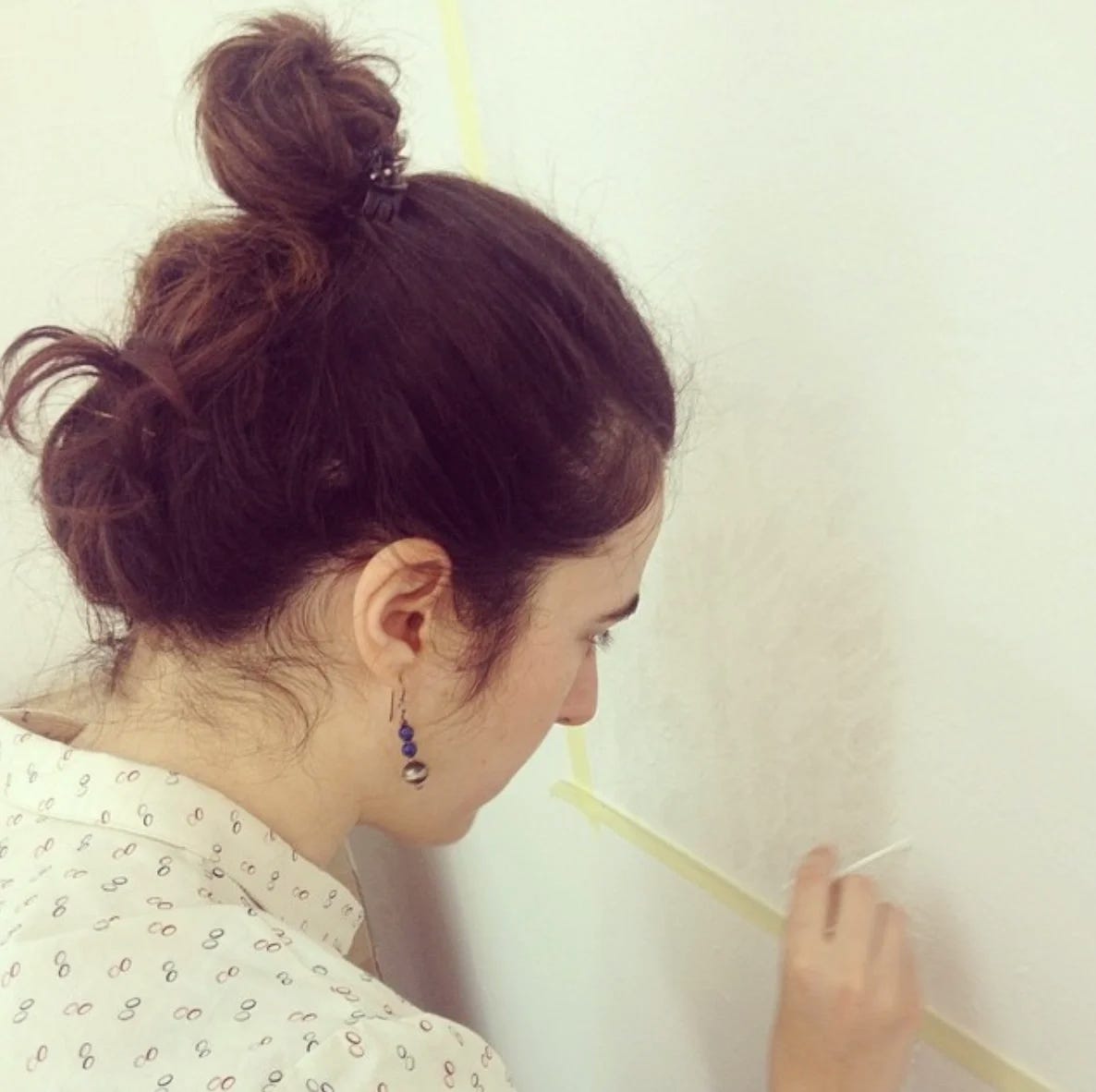
The second advice she gave me around the same time was about storms. I had written to her that I felt like I was about to be uprooted by a storm and that I was going to be blown away and lost. She told me that during a storm, the best you can do is to put your back against a wall, pull your knees to your chest, and hope for the best. I remember vividly how much this advice calmed me down. I couldn’t imagine, at the time, how much these small gestures of returning to stasis in a moment of crisis would matter. While it took me a while to come back to that sense of staying still, understanding and remembering that such a state existed helped me look up from my tumultuous introspection.
I was reading about a famous young woman’s decision to withdraw from public scrutiny, when I encountered this question that struck my heart. “What if she sang about obliteration and mimicked collapse?” I think and write about sinkholes as collapse and I often try to push back against my own tendency to imagine the earth as a body and the sinkholes as openings, mouths, cavities that heave. Reversing this thought, the question made me contemplate how human bodies become obliterated, how they collapse, while language mimics and moves around agencies of destruction. In our failure to imagine obliterations and collapses small and large, human and in/human, how do we remain articulate? How do we feel, speak, and move among the unspeakable? The urgent call to action for me is not about how to stay sane, but rather how to stay unobliterated, uncollapsed.